Yesterday I shared one of the most interesting meals in memory with Ben Finley ’14, who made the trip over from Córdoba Argentina for a few days. My larger academic purpose on this South American journey is to learn as much as I can, from an experiential level, about the history and memory of Latin American food. The restaurant Peumayen was right in this wheelhouse. I tasted over 30 small dishes that were created from historically important foods from before and after the arrival of Spaniards and subsequent Europeans. This is historical fusion at its best. I will try now to share as much as I can from this amazing meal.

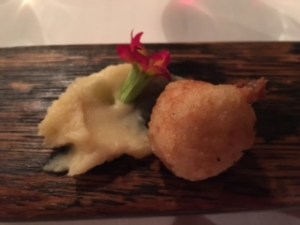
This was the first of several unrequested gifts from the kitchen, an amuse with a base of a lightly fried potato fritter, topped with a lightly seasoned herb and pearl barley garnish. OK, the meat in the middle? Don’t judge: horsemeat tartare. Slightly gamey, rich color like venison. The Spanish conquistadors would be aghast!

Another “comes with” course, “La Panera.” I’ll try to do this left to right. The waitress explained that these dishes correspond to different regions of South America. First, milcao, a small potato pancake from a mix of potatoes from the Andes. Second, catuto, a little drier bread made of cooked wheat. This is a traditional Mapuche bread which is both eaten and used in ceremonies. NB: it could not have been made prior to the conquest since wheat was indigenous to the eastern hemisphere. Like horses and rifles, the Mapuche (similar to Apaches in North American lore) appreciated some European additions more than others.
Third, chopon, a slightly sweet paste made of maize. Fourth and fifth are milokin, made with white and green bean pastes respectively, very moist and subtly flavored. The next one, a square piece that looks like a lemon bar, is a slightly sweet tart made from the bark of a tree in Easter Island. Following that is a slightly spicy sauce, Trapi Cacho de Cabra, meant for dipping with the flat bread q’alatant’a, more food from Mapuche culture. Finally we have Muquna, a delicious mix of quinoa and herbs from the highlands.
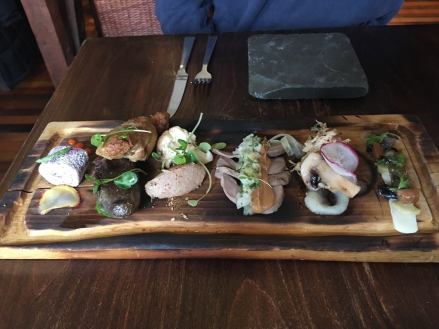
Ben and I attempted to choose a couple starters to share from the starter menu. Turns out, however, that they only serve the entire lot of them on a board to share. No problem! Bring it on! WAF!
I’ll let you struggle over which is which here… Here they are in no particular order: rabbit with olives and herbs, lamb tongue with hazelnuts, sweetbreads on blue potatoes and spinach, razor clam with seaweed, achawal (shredded and spiced chicken) with onion and mushroom, and tongue pate with smoked cauliflower. By now we are wondering what else is to come!
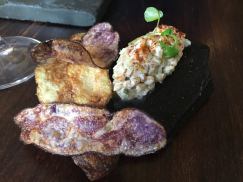

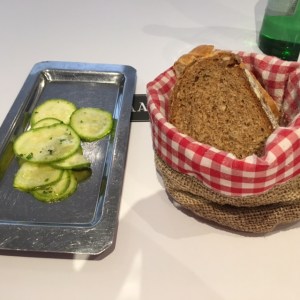
A couple more unanticipated gifts from the kitchen emerged before our entrees. On the left, a variety of thinly sliced potatoes with a sort of slaw made with barley. We were not sure just what the snack on the right was, even after hearing explanations in both English and Spanish. It tasted like a piece of fried fish skin, with an avocado garnish. Sharp and tasty.
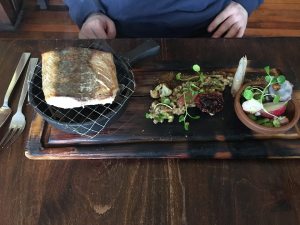
Ben’s entree, a smoked fish, arrived on a small charcoal grill with accompaniments. The filet was a deeper sort of whitefish, reminded me a bit of Mahi Mahi. Served with a variety of condiments made from barley, potatoes, pine nuts and lima beans. This was the first time that we were provided with cutlery during the entire meal! We were amused by the “fish knife” that Ben was given, hardly necessary since it cut nicely with a fork but still a pretty cool looking implement:

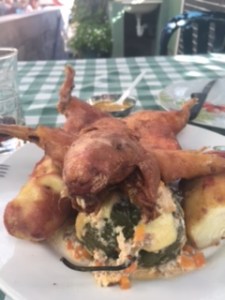
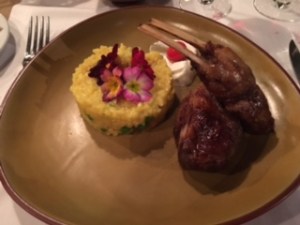
Still hungry? Here comes my entree, Rabbit with a variety of indigenous vegetables and lightly fried yucca. The latter is a root crop, firmer and drier than potatoes, found in in various forms in Latin America.

The shredded rabbit, on the left, was dipped into the hot broth on the right. This reminded my of Chinese hot pot, taught to me by Yao Li. Unlike the hot pot experience, there was no heating element below, so the waitress dropped a red hot volcanic rock into the broth, which made it boil. (I have a short video of this but wordpress does not seem to want it…. will post on FB)
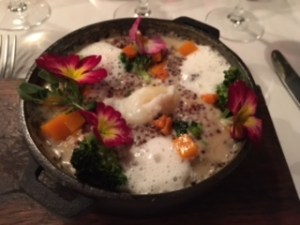
One more gift from the kitchen: a palate cleanser. Our best guess was a lightly sweetened vanilla gratinee. Definitely refreshing.
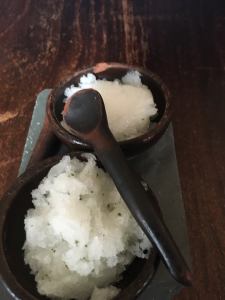
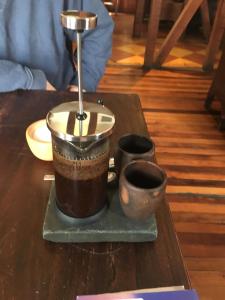
Is it even possible to eat dessert after all of this? Well, we paced ourselves. This was a three hour meal. So yeah, we went there. Dessert is the same plan as appetizers, they put everything on a wooden slat. We asked for espresso but got something better: strong French Press coffee with a syrup derived from the same semi tropical tree that sweetened our lemon bar type appetizer.
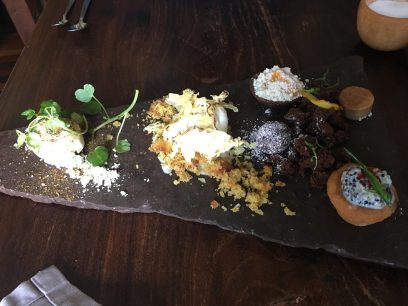
I’ll do my best to follow these down the slab from left to right.
Chañar (local tree nut) ice cream with coca dust (sorry, not the kind that the waiters were using in my 1980s restaurant days). Banana ice cream with dried pineapple and a “poe” streusel, yet another interesting comparative with Tahiti. A sort of chocolate crumble, not sure of the name, but it was like a slightly sweet brownie. Toasted flour and watercress garnishes.
In sum, one of the most interesting and varied meals in recent memory for both of us. Hope you enjoyed this digital version!
















 Chef Warner Stories