

Winemaking in Mendoza has deep roots that date back to the arrival of Jesuit missionaries in the sixteenth century. Their “criollo” wines were replaced with “noble” varietals from Europe, as immigration picked up in the nineteenth century. This immigration had massive effects on Argentine society, as it rolled into the twentieth century. Much of my project in this region is related to the culinary impact of these immigrants, Italian and otherwise. In Mendoza this produced a vibrant wine industry.
Casual wine shoppers in the U.S. can easily find Argentine wine…. but it is almost always red and usually Malbec. Here’s the big secret: many more varietals are produced in Mendoza! Nearly a third of the wine produced is in fact white, mostly from the northern regions of the province. Today the wine business is booming here, being followed quickly enough by the wine tourism business.
Mendoza wines come from two different “departmentos,” or counties: Maipú and Luján. The latter is the site of the newest area of grape development, Luján de Cuyo and the Uco valley, where new varietals are emerging. This is where many of the newer boutique wineries have spung up.
Enough chatter. Let me tell you about some of the wines that I have tasted in my days here.
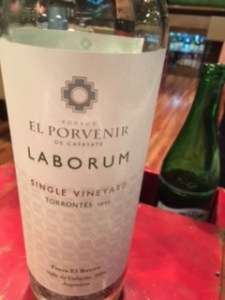
First, a crisp 2015 Torrontes from El Porvenir de Cafayate. Crisp, nice fruit. More body than the sauvignon blanc that I consume on warm afternoons, this should stand up to spicy foods.
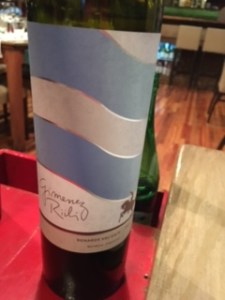
Gimenez Rilli 2015 Bornarda. This once was the most common grape in Mendoza before the rise of Malbec in the last generation or so. Now it’s used for many blends, in the way that Californians use Merlot to soften red blends. Surprisingly soft and subtle wine, with very little tannin. Ready to drink early enough. For me it was reminiscent of pinot noir, without the complexity, and with the lightness of chianti. Definitely a pasta wine. The waiter was surprised that I actually liked it more than the third wine of the tasting:
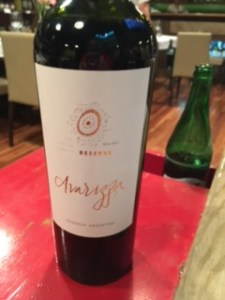
Alvarizza 2012 Malbec. This was great, just not as surprising to me as the previous wine. Rich and smooth, nicely aged though it could improve more with a couple years IMO. Some welcome dregs at the bottom of the glass. Some oak, not too much. I’m beginning to feel like the Argentines do not want to mess too much with the natural flavor of the grape, which I’ve been told can vary according to soil and weather conditions from year to year here. Definitely a great steak wine and it was fun to move back and forth between the malbec and the bornarda with the lamb I was eating.
I consumed the above wines as part of a tasting set with my dinner at Azafran (http://azafranresto.com) an eclectic restaurant defined by international fusions and impeccable service. They insisted on speaking English to me and I finally gave in. Here are some of the food highlights:

Homemade rolls, three varieties and bread sticks with, get this, a compound beet butter. I rarely eat butter with my bread but managed to devour most of this chunk.
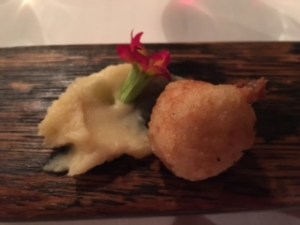
Risotto and mushroom fritter, parsnip puree
This came on the house as an amuse.
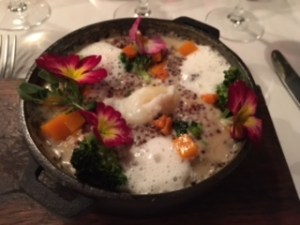
Quail egg (in center) baked with red quinoa and fresh cheese and vegetables. It was like a thick stew. Probably the most unusual dish I have eaten in Argentina.
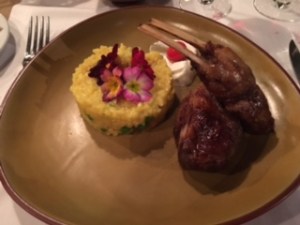
Lamb loin, chimichurri oil sauce, with saffron risotto.

Palate cleanser: raspberry sorbet, just a few tablespoons but perfect for the job.

Finally, a classic creme brûlée with creme anglaise and candied local fruits. The custard had a different flavor which is still stumping me. I had asked enough questions of the waiter that I let that one go.
Well, I am well over 500 words so the rest of the wines will have to wait for the next post. A teaser: there are seven of them that I tasted at a place called “Wine Not” (http://winenotmendoza.com). Not to worry, they were less than half a glass each!
 Chef Warner Stories