

[View from the street of the open kitchen of Restaurante Florentino in Mendoza. Check out the wood fire oven.]
I continue to eat my way through Argentina. The beef is indeed excellent, though I think even I have had my fill of it… All the same, here is one more pic from a huge slab that I somehow devoured. For the record, I did order it medium rare but it was still very tender in its pre-rare (or as we say in the business, “blue”) state.

Much of today was spent exploring the historical city of Mendoza. At the suggestion of the doña of the casa that I am staying in, Mercedes, I took one of those double decker tour buses on a two hour ride through town. I’ll be honest that I usually turn my nose up at that experience but this proved to be an excellent idea. All the more so since it was about 45 degrees with a wind. Still, I rode upstairs in the open air for much of the time. They provided me with a poncho:

Mendoza was home to the great independence hero of the southern cone (southern South America), San Martín. Less known than Bolívar, he is credited with liberating Argentina, Chile and Peru. The story between the two of these heroes gets a bit complicated after that. Take HIS 252 if you want the full treatment. Mendoza sports a beautiful park, named for their liberator, expertly designed in the late nineteenth century by a Frenchman Carlos Thayes. The bus wound its way to the top of a huge hill, where San Martín is commemorated with a statue for his legendary collection of revolutionary soldiers to cross the Andes to battle the Spaniards:
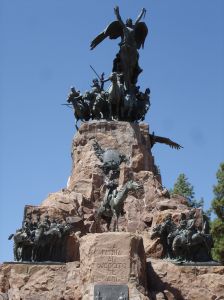
The deeper history of Mendoza makes stronger connections with my project, and will be the subject of further posts. For the time being I will note that the history of wine making in Mendoza (their claim to fame!) began with the Jesuits in the seventeenth century. The Black Robes and subsequent European immigrants learned a great deal about water management from the indigenous Huarpes, about whom I know very little just yet. Mendoza is situated in a semi-arid region, where rainfall is too scarce for grapes. However, the Huarpes had practiced irrigation techniques for years. By the eighteenth century the colonial government had completed a series of irrigation canals that drew off of water from the Andes. This is when wine production began to take off. In sum, this emphasis on irrigation learned from the Huarpes allowed colonial and now national wine industries to develop. In fact, every street of the city is bordered by these ditches, which today provide water for trees that would otherwise perish. Here are a couple pics of this technology:
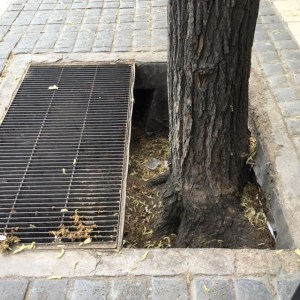
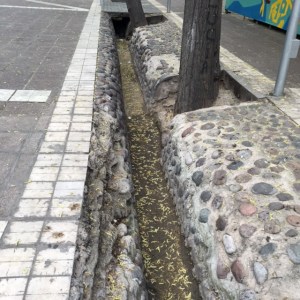
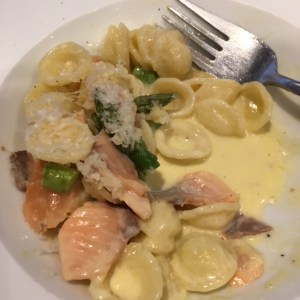
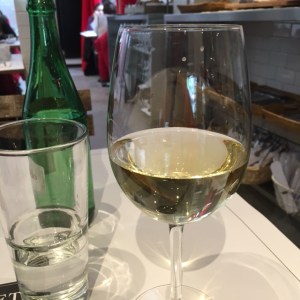
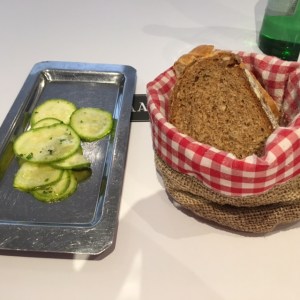
Strong Italian immigration has influenced the cuisine here, and there are other trends as well, which I will feature soon. I will leave you with a portrait of my pasta dish today, which I consumed at a restaurant called Maria Antoinette. More to the story there…
 Chef Warner Stories
I’m very anxious to read your posts when visiting the MendiA wineries. I have a Calif. marketing friend trying to get me to take a group there. I’d live to hear more, as well, upon your return.
LikeLike